




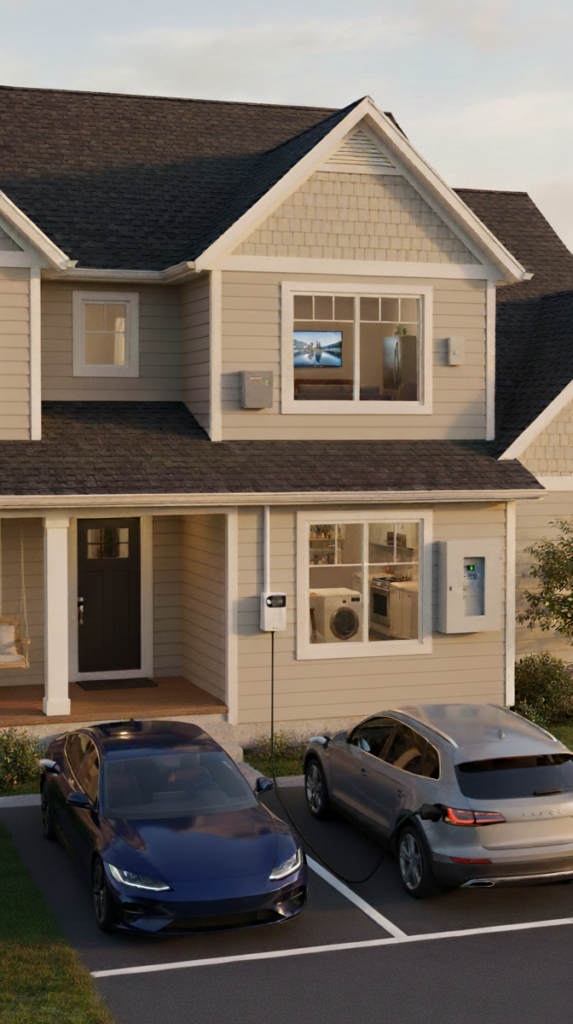
Best Practices for EV Charging in Summer
To ensure your electric vehicle charges safely and efficiently even in hot summer weather, it’s crucial to follow these best practices.
Choosing the Right Charging Location and Time
The choice of charging environment directly impacts battery temperature.
•Prioritize charging in shaded areas: Whenever possible, charge your EV in a garage, underground parking lot, or under a canopy. Avoid prolonged exposure of your vehicle and charging station to direct sunlight. Direct sunlight can significantly raise the surface temperature of the battery and charging equipment, increasing the thermal load.
•Charge at night or in the early morning: Temperatures are highest during the day, especially in the afternoon. Opt to charge when temperatures are lower, such as at night or in the early morning. Many EVs support scheduled charging, allowing you to set the car to automatically start charging during cooler, off-peak electricity hours. This not only helps protect the battery but can also save you money on electricity bills.
•Protect your charging station: If you’re using a home charging station, consider installing a sunshade or placing it in a shaded area. The charging station itself can also be affected by high temperatures, potentially impacting its performance or triggering overheating protection.
Optimizing Charging Habits for Battery Health
Correct charging habits are key to extending the lifespan of your EV battery.
•Maintain a 20%-80% charging range: Try to avoid fully charging (100%) or completely depleting (0%) your battery. Keeping the charge level between 20% and 80% helps reduce stress on the battery and slows down degradation, especially in hot environments.
•Avoid immediate charging when the battery is hot: If your EV has just been on a long drive or exposed to direct sunlight for an extended period, the battery temperature might be high. It’s not advisable to immediately engage in high-power charging at this time. Let the vehicle rest for a while, allowing the battery temperature to naturally drop before charging.
•Consider using Slow Charging: Compared to DC fast charging, AC slow charging (Level 1 or Level 2) generates less heat. During hot summer periods, if time permits, prioritize Slow Charging. This allows the battery more time to dissipate heat, thereby reducing potential damage to the battery.
•Regularly check tire pressure: Underinflated tires increase friction with the road, leading to higher energy consumption, which indirectly increases the battery’s load and heat generation. In summer, tire pressure can change due to rising temperatures, so regularly checking and maintaining correct tire pressure is very important.
Utilizing In-Car Smart Systems for Temperature Management
Modern electric vehicles are often equipped with advanced battery management and cabin preconditioning features. Leveraging these functions can effectively combat high temperatures.
•Preconditioning function: Many EVs support pre-activating the air conditioning during charging to cool the cabin and battery. 15-30 minutes before you plan to depart, activate preconditioning via your car’s system or mobile app. This way, the AC power will come from the grid rather than the battery, allowing you to enter a cool cabin and ensuring the battery starts operating at its optimal temperature, thus saving battery energy during driving.
•Remote cooling control: Even when you’re not in the car, you can remotely turn on the air conditioning via your mobile app to lower the interior temperature. This is especially useful for vehicles parked in direct sunlight for extended periods.
•Understanding BMS (Battery Management System): Your EV’s built-in BMS is the guardian of battery safety. It continuously monitors the battery’s health and temperature. When the battery temperature gets too high, the BMS will automatically take measures, such as limiting charging power or activating the cooling system. Understand how your vehicle’s BMS works and pay attention to any warning messages from your vehicle.
•Enable Cabin Overheat Protection: Many EVs offer a “Cabin Overheat Protection” feature that automatically turns on the fan or AC to cool the cabin when the interior temperature exceeds a set value. This helps protect in-car electronics and the battery from heat damage.
High-Temperature Strategies for Different Charging Types
Different charging types behave differently in high temperatures, requiring varied strategies.
| Charging Type | Power Range | Characteristics in High Temperatures | Strategy |
| Level 1 (AC Slow Charging) | 1.4-2.4kW | Slowest charging speed, least heat generated, minimal impact on battery. | Best suited for daily summer charging, especially at night or when the vehicle is parked for extended periods. Virtually no additional concerns about battery overheating. |
| Level 2 (AC Slow Charging) | 3.3-19.2kW | Moderate charging speed, generates less heat than fast charging, typical for home charging stations. | Still the recommended daily charging method in summer. Charging in shaded areas or at night is more effective. If the vehicle has a preconditioning function, it can be activated during charging. |
| DC Fast Charging (DC Fast Charging) | 50kW-350kW+ | Fastest charging speed, most heat generated, BMS speed limitation is most common. | Try to avoid using during the hottest part of the day. If you must use it, choose charging stations with awnings or located indoors. Before starting fast charging, you can use the vehicle’s navigation system to plan your route, giving the BMS time to precondition the battery temperature to its optimal state. Pay attention to changes in the vehicle’s charging power; if you notice a significant drop in charging speed, it might be the BMS limiting the speed to protect the battery.” |